
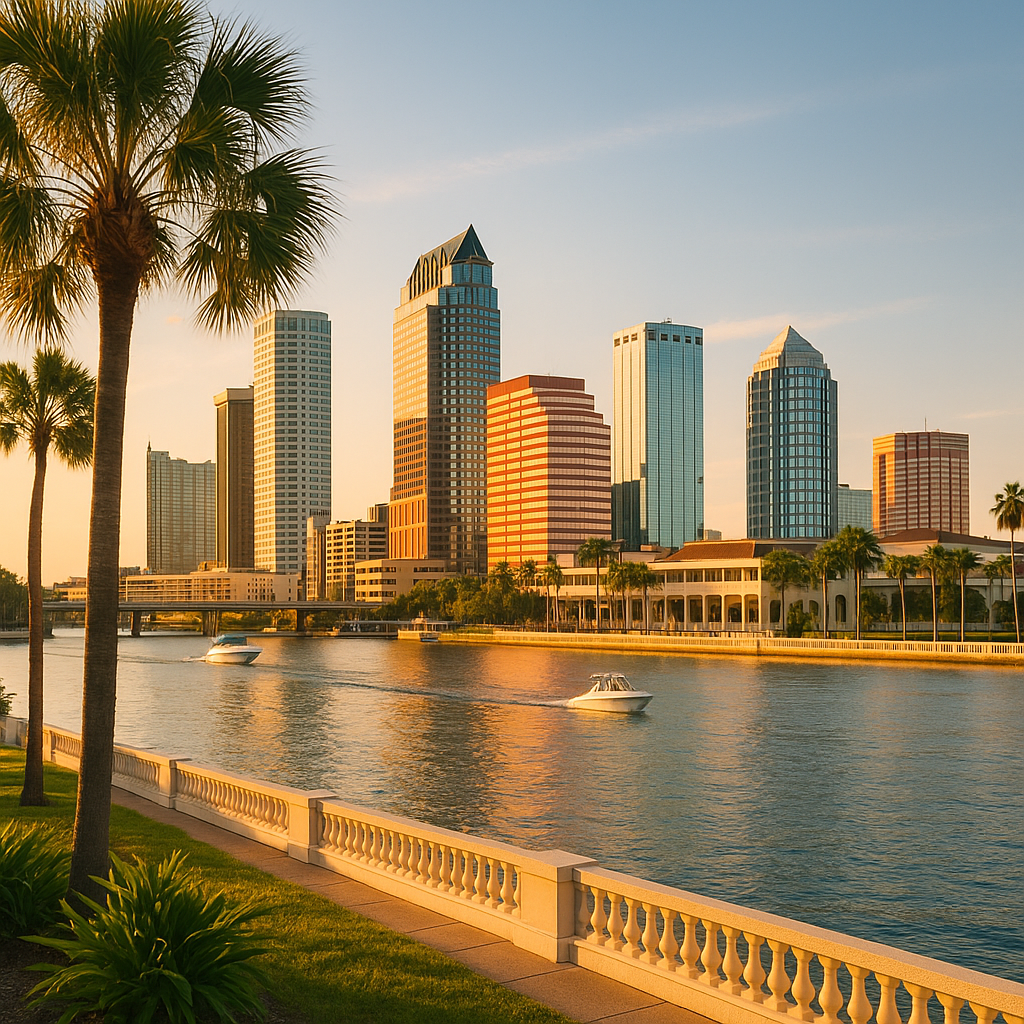
Thinking about relocating to Tampa, FL? You’re not alone. Tampa Bay has become the kind of place people hear about once, then suddenly start “just looking” at condos like they’re only there for the tropical vibe and accidentally end up comparing mortgage rates. Classic move.
The short version: Tampa offers warm weather, strong job growth, no state income tax, and a lifestyle that can swing from downtown waterfront living to quiet suburban neighborhoods in the same afternoon. That’s a pretty good pitch. But relocating here works best when you understand the tradeoffs before the moving truck shows up and your boxes start breeding in the garage.
Tampa is growing for a reason. Regional and Census-based reporting puts the Tampa-St. Petersburg-Clearwater metro at more than 3.4 million residents, and the area is still expanding even though the post-pandemic rush has cooled a bit. Tampa Bay remains one of Florida’s fastest-growing regions, with long-term forecasts pointing to continued in-migration through 2030.

Why So Many People Are Moving to Tampa
Tampa has become a magnet for people leaving higher-cost metro areas. Most of the time, it comes down to three things:
– Jobs
– Lifestyle
– Relative affordability compared with major coastal markets
The region’s economy is broader than many newcomers expect. Healthcare, retail, and hospitality still employ the most people, but professional services, finance and insurance, construction, logistics, and manufacturing all play major roles too. That matters because it gives Tampa more stability than a one-industry city. If one sector cools off, the whole market doesn’t wobble like a wobbly patio chair from 2007.
The city also skews younger than the broader region, which helps explain why it feels energetic without becoming chaotic. Restaurants stay busy, new apartment buildings keep rising, and there’s always someone talking about a new coffee shop, brewery, or condo tower like it’s breaking news. Takeaway: Tampa’s growth isn’t hype; it’s tied to a diversified economy and steady demand.
What the Tampa Housing Market Looks Like
Housing is usually the first thing people feel when they move here. Tampa is still cheaper than many Northeast, California, or South Florida markets, but it’s not the bargain bin it used to be. Demand has stayed strong, especially in neighborhoods with good school access, shorter commutes, or walkable urban amenities.
Here’s the practical version:
– Higher-priced, high-demand areas: South Tampa, Hyde Park, Westshore, and parts of New Tampa
– More attainable suburban options: Riverview, Brandon, Wesley Chapel, Ruskin, and some parts of Pasco County
– Urban living: Downtown Tampa, the Channel District, and Water Street for buyers or renters who want walkability
Tampa Bay development forecasts show some parts of Hillsborough County, including downtown ZIP code 33602, expected to keep growing quickly. That’s a clue: if you want an area with momentum, infrastructure investment, and new construction, Tampa has plenty of it. If you want a sleepy little market that barely changes, this probably isn’t your city.
Pro tip: Don’t shop Tampa like it’s one giant ZIP code. Neighborhood selection has a bigger effect on your daily life than a pretty listing photo and a staged sofa ever will.

Best Neighborhoods in Tampa for Newcomers
Tampa isn’t one-size-fits-all. The “best” place to live depends on how you work, commute, and spend your free time. Translation: the right neighborhood for a beach-loving remote worker is not always the same one a hospital employee or young family needs.
For urban convenience
If you want restaurants, nightlife, events, and shorter trips to the office, look at:
– Downtown Tampa
– Channel District
– Water Street
– Hyde Park
– SoHo
These areas appeal to people who want a more walkable lifestyle. The tradeoff is price. Convenience tends to come with a premium, as it does in almost every growing city. You’re paying for proximity, energy, and the ability to leave the car parked for a while. That’s not free, but it is nice.
For families
If schools, parks, and a more traditional suburban layout matter most, newcomers often look at:
– Westchase
– New Tampa
– FishHawk
– Riverview
– Brandon
These areas have plenty of newer housing and a broader range of price points. They’re especially popular with people who want more house for the money without drifting too far from the city. In other words, you may get the extra bedroom and the fenced yard without sacrificing your sanity on every errand run.
Pro tip: If school zones and commute times matter, check both before you fall in love with granite countertops. Countertops don’t get your kids to practice on time.
For fast growth and new construction
If you like newer communities, larger lots, and retail growth following rooftops like a loyal sidekick, take a look at:
– Wesley Chapel
– Pasco County suburbs
– Southern Hillsborough communities like Wimauma and Gibsonton
These areas have absorbed a lot of Tampa Bay’s recent population growth. New construction can be appealing because everything feels fresh and designed for modern life. The flip side? You may trade charm and established shade trees for traffic, ongoing development, and a neighborhood that still smells faintly of concrete dust.

Commutes and Transportation in Tampa: Plan Around the Car
Tampa is still very much a car city. Public transit exists, but it’s not the main way most people get around. If you’re relocating from a city where the train or subway is the default, this is one of the biggest adjustments.
A few realities to keep in mind:
– I-275, I-4, and the Veterans Expressway can get heavily congested
– A short drive on the map can turn into a longer commute during peak hours
– Living farther out can save money on housing, but it may cost you time in traffic
That’s why checking commute times before you choose a neighborhood is so important. A place that looks perfect online can become annoying fast if your morning routine involves a daily traffic crawl. That’s usually where people start reaching for more coffee than they planned.
Tampa International Airport is a big plus for frequent flyers, though. It’s one of the city’s most convenient assets and a major reason many business travelers and remote workers like the area.
Weather in Tampa: The Sunshine Comes With a Catch
Tampa’s climate is one of its biggest selling points, but it also deserves respect. Summers are hot, humid, and long. Winters are mild and make a lot of transplants wonder why they ever owned a snow shovel in the first place.
Then there’s hurricane season.
From June 1 through November 30, storm planning becomes part of life here. That doesn’t mean panic—it means preparation. If you’re buying or renting, look at:
– FEMA flood zones
– Hurricane and flood insurance costs
– Evacuation zones
– Building age and roof condition
– Generator or backup power options if you’re especially storm-conscious
Recent storm seasons have reminded residents that even when Tampa isn’t directly hit, heavy rain, surge risk, and insurance realities still matter. This is the part that causes the most head-scratching for newcomers, especially if they’re used to weather being more of a conversation topic than a budget line item.

Jobs and Long-Term Stability in the Tampa Market
One reason Tampa keeps attracting people is that the economy feels more balanced than outsiders expect. The metro has real strength in:
– Healthcare
– Finance and insurance
– Construction
– Logistics
– Professional services
– Hospitality and tourism
That mix supports both white-collar and blue-collar work, and it creates opportunities for people at different stages of life. Whether someone is relocating for a job transfer, launching a business, or simply trying to improve quality of life, Tampa has enough economic depth to make the move feel less like a gamble and more like a plan.
From a real estate standpoint, that’s not a small thing. Jobs bring people. People bring housing demand. Housing demand keeps neighborhoods active, supports retail growth, and helps maintain long-term value. Funny how that works, right?
Is Tampa a Good Place to Relocate?
For many people, yes. Tampa makes sense if you want:
– A warm climate
– Strong population and job growth
– A wide range of neighborhoods
– Better affordability than many coastal markets
– Easy access to beaches, sports, and airport travel
It may be less ideal if you need:
– Reliable rail transit
– Short commutes from far-flung suburbs
– Cooler weather
– A housing market that feels calm and predictable
Relocating here is a little like ordering the house special at a restaurant you’ve never tried before. Most of the time, it’s a great call. You just want to know what’s in it first, especially if “secret sauce” turns out to be parking frustration and a surprise flood zone.
If you’re moving to Tampa, the best approach is simple: choose the neighborhood based on your daily life, not just the ZIP code. That one decision can make the difference between loving the move and wondering why every drive feels longer than it should.
Joe Brown is a Tampa-based residential and commercial real estate advisor with Century 21 LIST with BEGGINS, helping homeowners, investors, and business owners make informed real estate decisions throughout the Tampa Bay area.
Contact me with any questions at [email protected] or reply to this post to subscribe to my monthly commercial real estate newsletter for more insights.
Leave a Reply